















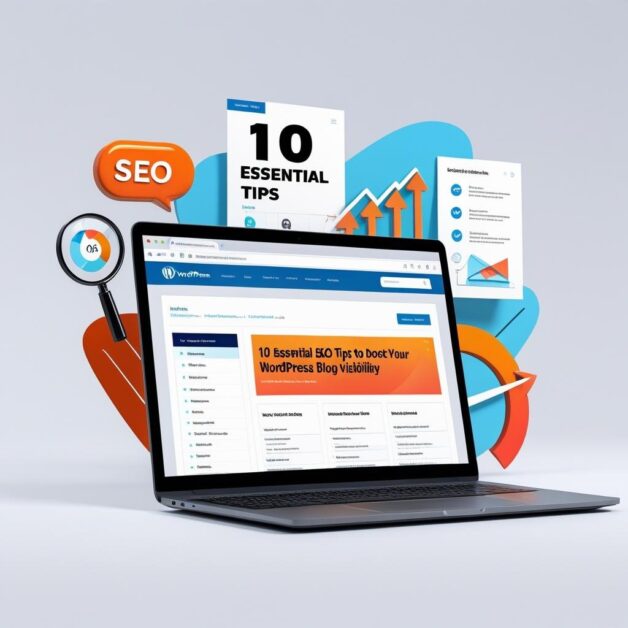
SEO Tips Every Blogger Needs to Know
My Google Analytics report was a joke. An actual joke. It looked like the heart monitor of a very, very dead patient. A flat line stretching into infinity.
I would spend days, sometimes an entire weekend, crafting what I felt was a masterpiece. A blog post so good, so insightful, that it was destined for greatness. I’d hit the publish button, buzzing with a kind of nervous energy, thinking, “This is the one. This is the one that goes viral.”
And then… nothing.
Radio silence. The only person who consistently read my blog was my mom. She’d send me a text that just said, “Very interesting!” Bless her heart.

It was more than frustrating; it was demoralizing. I felt like I was cooking these amazing, gourmet meals, but instead of serving them in a restaurant, I was just leaving them on my front porch in the middle of the night. No one knew they were there. I knew that I had to do something. I had to learn the real SEO tips every blogger needs to know, because just writing wasn’t cutting it. Not by a long shot.
So, one fateful evening, fueled by cheap coffee and pure desperation, I decided to face the beast. I decided to learn about SEO. I had no idea what I was getting myself into.
I Typed “What is SEO?” and Instantly Regretted It
So my big adventure began. I went to Google, full of hope, and typed in my simple question.




And what I got back was not an answer. It was a punishment.
My screen was instantly filled with a language I did not understand. It was like I had stumbled into a secret society of wizards, and they were all shouting spells at me. Spiders. Crawlers. SERPs. Algorithms. Backlinks. Anchor Text.
My eyes just glazed over.
I’m a regular person. I write about stuff I find interesting. I’m not a computer programmer. It genuinely felt like this whole world was designed by robots, for robots, with the explicit goal of making normal people feel dumb. And man, was it working on me.
Everything I clicked on just led to more confusion. One article would say one thing, and the very next would say the complete opposite. It was a hurricane of jargon and bad advice. My brain wasn’t just melting; it was boiling.
The Alphabet Soup Was Going to Kill Me
My first strategy was to try and learn the language. I thought if I could just memorize all the acronyms, I’d be okay. SEO. SERP. CPC. CTR.
Bad idea. Horrible idea.
It was like trying to learn Japanese by memorizing a random list of words. I could tell you what a word meant, but I had no idea how it fit into a sentence. I was no closer to understanding what I was actually supposed to do.
Then I ran into this thing called on-page SEO. From what I could gather, this was the stuff I was supposed to be doing on my actual blog posts. This sounded promising! This felt actionable. But every guide I read was a 10,000-word monster that used about a thousand words I didn’t understand. I was trying to learn how to swim, and people were handing me advanced physics textbooks about fluid dynamics.
The Great “Cat Food” Keyword Debacle
So, I decided to focus on just one thing: keywords. This seemed to be the thing everyone agreed on. Keyword research, they called it. The foundation of everything. How hard could it be?
I watched a couple of videos, puffed out my chest, and decided I was ready.
My blog at the time was a mess, but I wrote a lot about my incredibly picky cat, Winston. So I chose my first keyword. I was going to target the phrase “cat food.”
I’m an idiot, I know.
I wrote what I felt was the most heartfelt, emotional, and compelling post about Winston’s picky eating habits the world had ever known. It was a masterpiece of feline culinary literature. I strategically peppered the phrase “cat food” throughout the post. Then I sat back and waited for the fame and fortune to roll in.
What do you think happened? Exactly what you think happened. Absolutely nothing.
I had no idea then, but I had essentially just walked into the middle of Times Square, a scrawny kid with a ukulele, and tried to compete with a U2 concert happening on a giant stage next to me. I was trying to outrank huge pet food corporations, veterinary sites, and massive retailers. My little blog post never stood a chance. It was a spectacular failure.
Turns Out, So Much SEO “Wisdom” Is Just…Wrong
After the cat food incident, I wasn’t just frustrated. I was mad. I felt like the whole internet had lied to me. The gurus, the “experts,” the blogs with their smug top-ten lists… they made it sound so simple.
So I changed my approach. I stopped reading blog posts from people trying to sell me something. I started trying to find the source. Google’s own weird, dense, and confusing documentation. I started hunting for case studies and forum posts from regular people like me.
And I realized something that was both infuriating and incredibly freeing: most of the popular SEO advice out there is a myth. Or it’s so old it’s got digital cobwebs on it.
Realizing this meant I wasn’t a failure. I was just a person who had been following a really bad treasure map. It was time to find a better one.
The Giant, Useless Lie: “Just Write Great Content”
If I had a dollar for every time I read this phrase, I would have no need for SEO. It is the single most unhelpful piece of advice ever uttered.
What is “great content”? Is it beautifully written prose? Is it a Pulitzer-worthy investigation? I thought my post about Winston the picky cat was great content. It was funny, it was personal, it was well-written. But it was useless from an SEO perspective.
Because “great” isn’t what matters. “Helpful” is what matters.
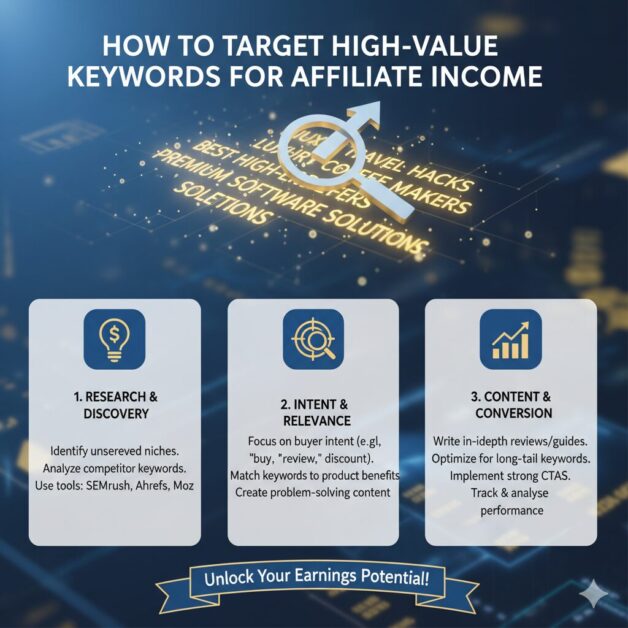
This is where I finally understood something called search intent. It’s a fancy term for a really simple idea: What was the person actually trying to do when they typed that thing into Google?

Someone searching for “cat food” wasn’t looking for a touching story about my cat. They were in “buying” mode. They were looking for reviews, for lists of top brands, for coupons. My story, no matter how “great” it was, didn’t match their intent. My content wasn’t bad; it was just the wrong answer to the question they were asking.
That Scary Thing Called “Backlinks”
For a solid month, my entire life revolved around backlinks. All the gurus said this was the holy grail. Links from other sites to your site. The currency of the internet.
So I became a backlink beggar. I spent hours leaving comments on other people’s blogs. Pathetic little comments. “Great post! Here’s a link to my unrelated blog.” I submitted my site to every free directory I could find. It felt dirty. It felt like I was spray-painting my blog’s URL on bathroom stalls across the internet.
What I didn’t get was that it’s not a numbers game. It’s a quality game. One good, relevant link from a trusted site in your world is worth ten thousand of those spammy links I was chasing. Chasing them was a complete waste of my time and my dignity. A document I found on a university website about information literacy drove this home; trust and authority are everything.
More Read


SEO Is a Game of “Tricking Google”
This was the biggest mental block I had to overcome. I really, truly believed that SEO was a battle of wits. Me, the clever blogger, versus the big, dumb Google robot. My job was to find loopholes and “hacks” to trick the robot into liking me.
This leads you down a dark path. It leads you to do things like “keyword stuffing,” where you repeat your keyword so many times your writing becomes unreadable. I’m guilty of this. It’s embarrassing.
But Google’s not a dumb robot. Google’s algorithm is built by thousands of people with brains bigger than my apartment. And it’s getting smarter every single day. Every. Single. Day. You cannot outsmart it. You just can’t.
The moment I stopped trying to trick Google was the moment the fog started to clear.
The Big “Aha!” Moment That Made It All Make Sense
So I was ready to quit. Honestly. I was burnt out, confused, and sick of feeling like an idiot. This SEO thing was just too big, too technical, too… everything.
And then, one day, it clicked. It wasn’t a sudden flash of lightning. It was more like my brain was a blurry photo, and someone finally, slowly, twisted the focus knob. The picture became clear.
I had the entire thing backward.
SEO isn’t about me. It’s not about my website. It’s about the searcher. It’s all about the searcher. My job isn’t to please a robot. My job is to frantically, desperately, and obsessively help a person.
I Stopped Fighting Google and Joined Its Team
Here’s the silly metaphor that changed my life. I hope it helps you.
Google is not a machine. Google is a librarian. The world’s busiest, most stressed-out librarian. Every second, millions of people rush up to her desk and ask a question. “Where can I find info on fixing a leaky faucet?” “What’s the best way to cook salmon?” “What is this weird rash on my arm?”


All this librarian wants to do is give that person the most perfect, most helpful, most amazing answer possible. Her entire career depends on her reputation for giving good answers.
My blog post? It’s just one of the billions of books in her library.
So, what is my job? My job is to be the best librarian’s assistant ever. My job is to make my little “book” so well-organized, so clearly labeled, and so ridiculously helpful that when that busy librarian glances at it, she thinks, “Oh, thank God. This is the one. This is exactly what that person needs.”
We’re on the same team. Me and the librarian. We both just want to help the person asking the question. This one simple shift from an adversarial mindset to a cooperative one changed everything.
This Is Why “User Engagement” Is a Thing
Suddenly, all the confusing jargon started to make sense through this “librarian” lens. It all just clicked into place.
Why does my site need to load fast? Because the librarian’s patrons are impatient! They won’t wait for a slow-loading book.

Why does it need to be mobile-friendly? Because people are reading these books on all sorts of devices! In line at the grocery store. On the bus. Of course it has to work on a phone.
What is user engagement? It’s just a fancy way of asking, “Did the person who checked out your book actually read it? Or did they just glance at it and immediately return it?” When someone comes to your site and then immediately leaves (a “bounce”), they’re telling the librarian that your book wasn’t helpful. But if they come, stay for a while, and maybe even click over to read another one of your “books”? You just made the librarian look like a rock star. And she will remember that. This is what I was trying to say in my post about [Why I’m Now Obsessed With “Time on Page”]. It’s a huge signal of helpfulness.
My Real-World, No-BS List of SEO Things I Actually Do Now
Okay. So after my journey through the five stages of SEO grief, what do I actually do? This is not a list of guru-approved “hacks.” This is just my own cobbled-together checklist. It’s what I do to try and be a good librarian’s assistant. These are the SEO tips every blogger needs to know, at least from this regular person’s perspective.
1. I Hunt for Questions, Not Just Keywords
I learned my lesson from the “cat food” disaster. I no longer start by thinking about keywords. I start by thinking about problems. I ask myself, “What is someone in pain about? What are they confused about?”



I hang out on Reddit and Quora. These sites are literally just giant collections of human problems.
I type a broad topic into Google and look at the “People Also Ask” box. It’s Google literally telling me, “Here are the questions people have!”
I look for long-tail keywords. These are longer, more specific questions. I don’t target “cat food.” I might target, “what is the best grain-free cat food for a cat with a sensitive stomach.” One is a fistfight with the world. The other is a helpful conversation with a person in need.
2. I Build the “Table of Contents” First
Before I write a single paragraph of my actual post, I write the structure. This is my on-page SEO foundation. I’m making my book easy for the librarian to skim.
My title (H1) is always a clear promise. It tells the reader exactly what problem I’m about to solve.
My URL is short and descriptive. No weird numbers or dates.
My subheadings (H2s and H3s) are a logical outline of the post. They guide the reader through the journey of the answer. Each subheading is a mini-question that my post will answer.
This framework is what turns a messy brain dump into a helpful, organized resource.
3. My Goal Is to Create a “Zero-Bounce” Post
Getting someone to click is only half the battle. I want them to stay. I want them to have a good time while they’re at my digital house party. So, user experience is my secret obsession.
For me, that looks like:
Writing like a human, not a robot. Contractions. Short sentences. Questions.
Tiny paragraphs. I never write a paragraph longer than three sentences. Big walls of text are terrifying.
Lots of white space. Let the words breathe!
Helpful images that actually add value, not just stock photos of smiling people at computers. I use Canva for this, and it’s been a game-changer.
4. I’m a Compulsive Internal Linker
This was a big one for me. My old posts were dead ends. Once a reader finished, their only option was to leave. Bad move.
Now, internal linking is a core part of my writing process. As I write, I’m always thinking, “What’s their next question going to be?” Then, I find another article I’ve written that answers that next question and I link to it.
It’s helpful for the reader, and it sends a powerful signal to the Google librarian. It shows that I have a whole shelf of helpful books on this topic, not just one. It’s how you start building topical authority. As I mentioned in a previous post, [How Internal Links Became My Secret Weapon], it’s a way to keep your readers in your little ecosystem.
5. I Try to Build Trust with a Thing Called E-A-T
This is a concept I learned late in my journey, but it might be the most important. E-A-T stands for Expertise, Authoritativeness, and Trustworthiness. Google talks about this in their own quality rater guidelines. It’s especially important for topics about health or money.
I’m not a doctor or a financial expert. So how can I build trust?
I link out to authoritative sources, like university studies or reputable news sites. This shows I’ve done my homework.
I write about my own firsthand experience. I don’t pretend to be a guru. I say, “This is what happened to me…”
I have a clear “About Me” page that explains who I am.
It’s all about being transparent and honest. You build trust one helpful, honest post at a time.
So, Where Does This Leave Me? Still Not a Wizard.
I’m never going to be one of those SEO gurus who talks in acronyms. I still don’t understand half the stuff they talk about, if I’m being honest. And I think I’m okay with that.

But I’m not afraid of SEO anymore. It’s not a monster under my bed. It’s just a set of tools that help me be more helpful.
My analytics chart isn’t flat anymore. It has bumps. It has life. Not because I discovered a secret trick, but because I stopped trying to trick anyone. I just started trying to help my librarian. And that has made all the difference.
So if you’re staring at your own flat line, take a breath. It’s not magic. It’s just about being a good person who is trying to help another person. And you definitely already know how to do that.
What’s the one part of SEO that still makes you want to throw your computer out the window?