

















I Ignored Every Marketing Guru. Here’s How I Finally Reach My Readers Without Having to Master Marketing.
The click of the laptop closing was the loudest sound in the room.
It was a sharp, plastic-on-plastic sound of utter defeat. I’d been staring at a flat line for what felt like an hour. The analytics graph. That cruel, horizontal line that proves, with mathematical certainty, that not a single soul on this planet cares about what you just spent a week pouring your heart into.
Nothing. Zero. Zilch.


It was more than just disappointing. It was a kind of quiet, digital shame. I felt like I had thrown a party and not a single person had even bothered to RSVP.
Everywhere I looked, the advice was the same: you want to be a writer, kid? Tough. First, you have to be a marketer. You have to learn the lingo, build the funnels, run the ads. You have to become one of them.
And I just… couldn’t. The whole song and dance felt so fake. So I decided that if I couldn’t find a way to reach my readers without having to master marketing, then I was done. I’d just stop. I’d go touch grass, as they say.


This is the story of how I threw out the entire marketing playbook and, in the process, accidentally stumbled upon something that actually works.
Down a Rabbit Hole Lined with Jargon and Bad Advice
It started, as most of my bad ideas do, with a YouTube spiral. I was trying to understand the basics. You know, just get my bearings.
I ended up watching this guy—slicked-back hair, blindingly white teeth, standing in front of a rented Lamborghini—who talked about “crushing it” and “10X-ing your engagement.” He spoke with the breathless urgency of someone who had just discovered a secret so profound it could bend reality.
The secret, it turned out, was a five-step sales funnel that looked suspiciously like a pyramid scheme.
It was baffling. I felt like I was listening to a foreign language. A language made up entirely of acronyms and buzzwords designed to make you feel stupid. SEO, CTA, CRM, KPI. It was an alphabet soup of anxiety.
And look, I’m not an idiot. But this stuff made me feel like one. It was so dense, so needlessly complex. It felt like a deliberate gatekeeping effort. A secret club where the price of admission was your sanity and your soul.
The Day I Tried to ‘Optimize’ My Soul Away
I decided to pick one thing. Just one. SEO. Search Engine Optimization. It sounded important.
So I downloaded a guide. A 50-page PDF. It told me to find “low-competition keywords with high search volume.” Which sounds great, except it’s like being told to find a unicorn that also lays golden eggs.
I spent an entire Saturday trying to write a single article “the right way.” I had my keyword. I had a list of other “LSI keywords” I was supposed to sprinkle in. I was trying to make sure my “keyword density” was between 1% and 2%.
The result? It was unreadable. It sounded like it was written by a robot. A very confused, very stressed-out robot. I had so completely contorted my writing to please a machine that I had squeezed every last drop of humanity out of it.
This wasn’t about genuine audience engagement. It wasn’t even about writing anymore. It was about appeasing a mysterious algorithm god in the sky.
The Promise of Community, The Reality of Spreadsheets
The gurus always talk about connection. About building a community. But then, in the very next breath, they tell you to automate your DMs and set up an email “drip campaign” to “nurture your leads.”
How do you build a community when you’re treating people like “leads”? How do you forge a connection when you’re talking to them through a pre-written, automated script?
It’s a contradiction. A lie, really.
I remember my one pathetic attempt at this. I built a landing page for a free checklist I made. It was hideous. I used some free tool and it looked like a hostage note. Then I was supposed to “drive traffic” to it.
How? I had no traffic to drive. It’s the classic chicken-and-egg problem. You need an audience to get an audience.
The whole process felt so… transactional. So cynical. It wasn’t about sharing and connecting. It was about capturing emails and moving names from one column of a spreadsheet to another. It felt like the opposite of everything I valued. And it was a spectacular failure.
I was done. I was officially quitting the marketing game.
The Big Bonfire of Bad ‘Marketing’ Advice
So I stopped. I really did. I unsubscribed from the newsletters. I stopped watching the videos. I put all my focus back on one thing: writing stuff that I actually wanted to write.
I just put it out there. No promotion. No strategy. No expectations.
And in that quiet space, I started to notice things. I started observing my own behavior as a reader. What made me love a writer? What made me open their emails every single time? What made me feel like I knew them?
The answer was never “because they had a great sales funnel.”
This led me to a new, more righteous kind of rabbit hole. A crusade, almost. A crusade against the mountain of bad advice that is crushing creative people under its weight.
The Great ‘Go Viral’ Delusion
First, let’s just kill this idea right now. The idea that the goal is to “go viral.”


It’s a fantasy. A deeply unhelpful one. Chasing virality is like trying to bottle lightning. It’s a waste of energy and a surefire path to disappointment. It distracts you from the real work.
But even if you do catch that lightning, what then? A viral hit brings you a crowd, not a community. They’re tourists. They’ve come to see the spectacle, the car crash. They’ll look, they’ll maybe share, and then they’re gone. Poof. On to the next thing.
A viral audience is a mile wide and an inch deep. They don’t care about you. They care about the one thing that went viral. They won’t stick around for the next thing.
I’d rather have 100 true fans than a million tourists. And you can’t get true fans by chasing a viral moment. You get them through consistency and an authentic connection. Slowly. Painfully. But for real.
More Read


The Soul-Sucking Myth of Being Everywhere
This one is so insidious. “You have to be where your audience is!” Which, okay, sounds logical. But my audience, like most people, are human beings who exist in lots of places. And I am one person with a finite amount of energy and a day job.
Trying to be active on Instagram, TikTok, Facebook, Twitter, and LinkedIn is a recipe for burnout. It’s a guarantee that you will do a mediocre job on all of them.
I tried it. My brain felt like it was split into five different personalities. The Instagram me had to be visual and quippy. The LinkedIn me had to be professional and boring. The Twitter me had to be angry and clever.
It was exhausting. And none of them felt like the real me. I was just making noise. I wasn’t connecting with anyone because I was spread too thin to have a real conversation. This is one of the biggest content strategy myths out there. It’s advice for corporations with social media teams, not for a single human being trying to share their work.
It’s better, I think, to be a real, interesting person in one place than a watered-down, robotic version of yourself in five.
The Absurdity of the “Perfect” Posting Time
“Post at 8:00 AM on Tuesdays, but only if it’s not a holiday and the moon is in Capricorn.”
The obsession with the “best time to post” drives me absolutely insane. It’s the ultimate example of prioritizing a machine over a human.
It forces you to treat your creativity like an assembly line. Got a great idea on a Friday night? Sorry, pal. The algorithm demands you wait until Sunday morning to share it.
But the magic is in the moment. The excitement you feel when you’ve just written something you’re proud of is contagious. People can feel that energy. That spark is a thousand times more powerful than any optimized time slot.
An article I read from Claremont Graduate University—which I found while angrily Googling “does authenticity matter”—basically confirmed this. Trust and engagement are built on authenticity. And you simply cannot schedule authenticity on a content calendar. It’s a joke.
The Tiny Shift in Thinking That Fixed My Entire Brain
For months, I was a man with a megaphone. I thought my job was to yell. To broadcast my “content” from a digital rooftop and hope that the wind would carry my voice to the right people.
It was all about my output. My schedule. My ideas. My work.


Me, me, me.
That was the fatal flaw. The thing that kept me on that flat line.
The breakthrough wasn’t some complex strategy. It was a simple, almost stupidly obvious thought that hit me one day while I was washing dishes.
What if this isn’t about me at all?


What if it’s about the person on the other end? The reader.
My job isn’t to be a broadcaster. My job is to be a host.
Putting Away the Megaphone
Think about it. If you invite people to your house, you don’t meet them at the door and start shouting about how great your house is. You don’t shove a flyer for your next party into their hand.
You welcome them. You take their coat. You ask them what they’d like to drink. You try to make them feel comfortable. You try to create a space where they want to stay and hang out for a while.




That’s it. That’s the entire model.
Every single thing I write now is filtered through that one lens. I’m not thinking about what I want to say. I’m thinking about what one specific person might need to hear. Sometimes that’s a solution to a problem. More often, it’s just a story that makes them feel less alone in the world.
This mindset simplifies everything. It dissolves the pressure. I don’t have to be a guru or an expert. I just have to be a decent host.
Quit Trying to Please Everyone
The other half of this realization was giving up on the idea of writing for “everyone.”
Trying to appeal to everybody is a losing game. It forces you to be generic. You sand down all your interesting edges, you soften all your strong opinions, you flatten your unique voice, all in the hopes of not offending or alienating anyone.
The result is that you become beige. You’re wallpaper. You don’t connect with anyone because there’s nothing there to connect with.
Forget “niching down.” That’s just more corporate-speak. I like to think of it as finding your niche audience by looking for your specific type of weirdo. Who is the one person who will read your stuff and think, “Oh, thank God. I thought I was the only one”?
Write for that one person. And write for them exclusively. Forget everyone else. They don’t matter.
When I started doing this, everything changed. I wasn’t performing for a faceless crowd anymore. I was writing a letter to a friend. If you want to dive deeper into this idea, I wrote another post about it called “Why I Stopped Chasing a Million Followers.” It’s all about the power of small.
The weird paradox is that when you get hyper-specific and write for just one person, you end up attracting a whole lot more of them. Your people find you.
My Weird, Unscalable, Probably Inefficient System That Actually Works
So, what does this all look like day-to-day? What am I actually doing?

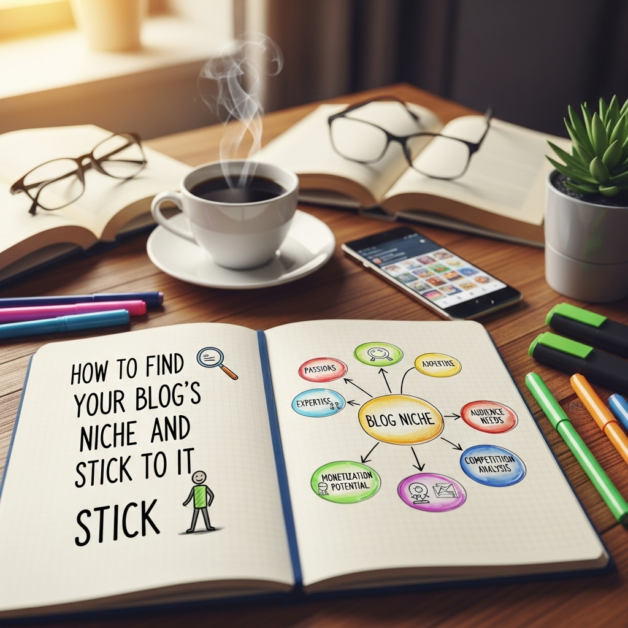
Let me be clear: this is not a sleek, optimized machine. It’s a messy, human, cobbled-together system that is probably full of inefficiencies. But it’s mine. And it lets me reach my readers without having to master marketing while also not losing my mind.
Here’s my personal, no-B.S. guide.
1. I Eavesdrop. Shamelessly.
I’ve completely stopped brainstorming. Brainstorming is sterile and produces terrible, generic ideas.
Instead, I lurk. I find the online corners where my people hang out—a few subreddits, some forums, the comments sections of other blogs—and I just listen. I read. I pay attention to the language they use, the questions they ask, the things they’re mad about.
My best ideas are basically stolen. I find a question someone has asked and I try to answer it in the most honest, personal way I can. It’s a truly reader-centric approach. I’m not inventing problems to solve; I’m just listening to the problems people already have.
2. I Write Like I Talk.
When I write, I picture that one person—my ideal reader—sitting across from me at a slightly sticky table in a coffee shop. And I just talk to them.
This means my writing is informal. I use contractions. I start sentences with “And” or “But.” I use sentence fragments. For emphasis. Because that’s how real people talk.
I tell stories. I admit when I don’t know something. I make bad jokes. I try to be the person I actually am, not the “writer” I think I’m supposed to be. It seems to work.
3. I Have One Campfire. That’s It.
Instead of trying to be everywhere, I’ve poured all my energy into one place: my email newsletter. That’s my campfire. That’s the home base.
Social media? I treat it like a flyer I’m posting on a telephone pole. It’s a sign that points back to the campfire. I don’t stress about it. I don’t live there.
My goal is to create one space that feels valuable and real. I write to my email list like they’re my friends, because at this point, many of them are. And I make it incredibly easy to reply. I ask them questions. And I write back to every single person.
It doesn’t scale.







Very interesting one