









I Was Drowning in Post-it Notes. Then I Looked Into the Tech Investments Every Business Should Consider to Stay Competitive.
The day it all broke was a Thursday. The kind of Thursday where the coffee doesn’t work and the to-do list seems to be actively mocking you.
My desk, if you could even call it that, was a disaster area. It was covered in a multi-colored blizzard of Post-it notes. Some had phone numbers. Others had order details. A few just had cryptic, single words like “FOLLOW UP!” or “WEBSITE THING.” My computer screen wasn’t much better, with about a dozen spreadsheets open, each one a different shade of chaos.
I was running my own small business, my passion project. And it was slowly, surely, crushing me.
I’d just gotten an email from a customer asking for an update on an order I had completely forgotten about. My stomach dropped. This was happening way too often. Meanwhile, I’d see competitors—businesses that started around the same time as me—gliding past. Their websites were slicker. Their social media was flawless. They seemed so… professional. And I was over here, drowning in my own manual, paper-based system.

I felt like I was running a marathon in flip-flops. That night, buried in frustration, I realized something had to give. I couldn’t work any harder. I had to work smarter. So, with a deep sigh, I opened a new tab and typed a phrase that felt way above my pay grade: tech investments every business should consider to stay competitive.
It was the start of a deep, confusing, and ultimately game-changing rabbit hole. This is my story of crawling out of the paper jungle and into the modern world. I’m no expert. Not even close. I’m just a person who got tired of losing to their own to-do list.
My First Steps into the Business Tech World Felt… Intimidating
Okay, so where do you even start? My first search results were, frankly, terrifying.
I was hit with a tidal wave of acronyms and buzzwords that sounded like a foreign language. SaaS, ERP, API, PaaS. I felt like I needed a four-year degree just to understand the headlines. The websites were all sleek and minimalist, with pictures of smiling, impossibly diverse teams in glass-walled boardrooms. That wasn’t my reality. My reality was me, in my sweatpants, trying to figure out why my printer was jamming again.
It felt like trying to learn how to cook by reading the menu at a five-star restaurant. You see the fancy words, but you have no idea what they mean or how any of it is actually made.
For a minute, I honestly thought about just giving up. I thought maybe I wasn’t cut out for this. Maybe I was just a “pen and paper” person, and that was that. It seemed easier to just accept my fate as a disorganized mess.
But that image of my competitors gliding by, it stuck with me. What did they know that I didn’t? I had to at least try to understand. So I grabbed a fresh cup of coffee and decided to tackle one term at a time. Even if it took all night.


Trying to Understand What “The Cloud” Even Is
My first target was cloud computing for small business. Everyone talks about “the cloud.” It’s everywhere. But if you’d asked me to point to it, I couldn’t have.
To me, “the cloud” was that magical place my phone stored my photos. The idea of running my actual business on it? That seemed vague and untrustworthy. Where does the data go? Who has it? Can it just disappear one day? My filing cabinet, for all its faults, felt solid. Tangible. I could kick it if I needed to.
I started reading articles trying to explain it. They used terms like “virtualized infrastructure” and “on-demand compute resources.” My eyes just glazed over. It felt completely disconnected from my real-world problems.
This wasn’t helping me find that lost customer order. It was just giving me a headache and making me feel dumb. And that’s a terrible combination.
The Word “Automation” Sounded Like Robots Were Coming for My Job
Next up was automation tools. This one sounded even scarier.
When I heard “automation,” I pictured a giant factory floor with huge robotic arms assembling cars. It sounded incredibly expensive and complex. It was for Ford and Amazon, not for a small business owner working from a spare bedroom. What was I going to automate? The way I stick Post-it notes to my monitor?
I tried one. I found a supposedly simple tool that promised to automate social media posts. I spent an entire Saturday trying to set it up. I followed the tutorials. I watched the YouTube videos. At the end of the day, all I had managed to do was accidentally send out a blank tweet to my 200 followers.
It was a disaster.
This was exactly what I was afraid of. These tools weren’t built for people like me. They were built for tech wizards. Trying to use them just made me feel more incompetent than I did when I started.
My analogy for this whole experience is this: Trying to upgrade my business with technology felt like trying to turn a bicycle into a spaceship. But instead of getting a helpful mechanic, I was just handed the spaceship’s 500-page technical manual and told, “Good luck.”
I wasn’t just lost. I felt like I was in the wrong universe entirely.
Turns Out, a Lot of My Assumptions About Tech Were Just Wrong
After that disastrous weekend with the automation tool, I was so close to throwing in the towel. My brain hurt. I was convinced this was all a huge waste of time and I should just invest in more Post-it notes.
But I’m stubborn.
So, I changed my strategy. I stopped trying to understand the tech itself. Instead, I started looking for stories from other small business owners. People who were like me. People who seemed just as confused as I was.
And that’s when I had my first breakthrough. It wasn’t about the tech. It was about my own terrible assumptions. I realized I was carrying around a suitcase full of myths and misconceptions that were holding me back.
It was time to unpack. And what I found was pretty embarrassing. But also, incredibly freeing. It turns out, I was wrong about… well, pretty much everything.
I Thought Cybersecurity Was Only a Problem for Big Banks (Yikes)
This was my biggest and dumbest blind spot. Whenever I saw a headline about a data breach, it was always a massive corporation. A huge bank, a giant retailer. I figured, who would bother hacking my little business? It would be like a bank robber holding up a kid’s lemonade stand.
I was so, so wrong.
I started reading, and my blood ran cold. It turns out hackers absolutely love small businesses. Why? Because we’re easy targets. We have the same valuable data—customer names, emails, credit card info—but we don’t have an IT department or a multi-million dollar security system. We’re the low-hanging fruit.
The more I learned about basic cybersecurity measures, the more I realized I had basically left my digital doors and windows wide open. My password was “Password123.” I wasn’t using two-factor authentication anywhere. I was a walking, talking security risk.
The U.S. Small Business Administration has entire sections of its website dedicated to this because it’s such a critical threat. One article from a source like that ([External Link 1: to the SBA cybersecurity page or a reputable source like the National Cybersecurity Alliance]) was enough to scare me straight. I realized cybersecurity wasn’t a luxury item for the big guys. It was a fundamental, non-negotiable cost of doing business in the 21st century.
More Read

I Believed a CRM Was Just a Glorified, Overpriced Address Book


Whenever I heard the acronym CRM, my eyes would glaze over. Customer Relationship Management. It sounded so corporate. So clinical.
In my head, a CRM was a tool for slick salespeople in suits—the kind of people who say things like “let’s circle back” without a hint of irony. I imagined a super-complicated dashboard full of charts and graphs that wouldn’t actually help me do anything but would cost me a fortune every month.
I used a spreadsheet for my customer list. And my brain. What more did I need?
This myth kept me stuck for a long time. I couldn’t see the point. Why pay for a fancy, digital Rolodex when I had my system of organized chaos?
It wasn’t until I watched a demo from another small business owner—a potter who used a CRM to keep track of her custom orders—that I started to get it. She wasn’t a slick salesperson. She was a creator, like me. And she used it as her second brain. A place to keep every customer interaction, every email, every order note, all in one clean, organized place. A place that would automatically remind her when to follow up.
It wasn’t a tool for managing customers like they were assets. It was a tool for not letting people down. And that… that I understood. I wasn’t just wrong about what a CRM was; I was wrong about what it was for.
The One Simple Idea That Finally Made All This Tech Stuff Click
For weeks, I was stuck in the weeds. I was collecting facts and learning terms, but none of it felt connected. I knew, intellectually, that these tools were supposed to help. But I couldn’t see the big picture.
I was focused on the individual tools. “Should I get this CRM? Or this automation software? Or this cloud storage?” I was comparing features and prices, trying to find the single “best” tool, as if there was one magic bullet that would solve all my problems.
And then, one morning, it finally clicked. I was reading a blog post from some tech person, and they used a phrase that stopped me in my tracks. They weren’t talking about software or hardware.
They were talking about data.
And that’s when I had my “aha!” moment. It wasn’t about the tech at all. The tech is just the delivery system. The thing that actually matters, the thread that ties all of this together, is data.


It sounds so simple, right? But for me, it changed my entire perspective on what I was even trying to do. I realized I was trying to solve my problems without even knowing what my problems actually were. I was flying blind.
Before, I Was Driving My Business at Night with No Headlights
My old approach to my business, my beloved pen-and-paper system, was like driving a car at night with the headlights turned off.
Think about it. I was relying entirely on my own memory, my own flawed perceptions. I “felt” like certain products were popular. I “thought” I knew who my best customers were. But I didn’t actually know. I couldn’t prove any of it. I was just guessing. I was navigating a winding, dangerous road using only the faint glow of the dashboard.
This was my big problem. Not my messy desk. Not my lack of software. My big problem was my lack of vision. My lack of information. I was data-blind.
All these tools I had been looking at—CRMs, analytics, automation software—they weren’t just random, separate gadgets. They were a headlight system. A full-blown illumination package.
The CRM doesn’t just store customer names; it illuminates who your most loyal customers are and what they buy. Analytics software doesn’t just track website visits; it illuminates the path people take to find you and where they lose interest. AI-powered analytics, which used to sound like something out of a sci-fi movie, is just a super-powered flashlight that can find patterns in that data that you would never see on your own. For more on this, I actually wrote a whole post on my surprising journey with data. ([Internal Link 1: to a hypothetical blog post titled “Your Business Has a Superpower You’re Not Using: It’s Called Data”]).
Finally, I Started Asking the Right Questions
This shift from thinking about “tech” to thinking about “illumination” was everything. It helped me get out of the weeds and focus on what really mattered.
My question was no longer, “Which CRM should I buy?”
My new question was, “What do I need to see more clearly in my business?”

The answer came instantly. I need to see my customers more clearly. I need to see my sales patterns more clearly. I need to see where my time is being wasted more clearly.
And just like that, the tech became a secondary concern. It became a means to an end. It was the tool you use to answer the important questions. I wasn’t buying software anymore. I was buying answers. I was buying clarity.
Suddenly, I felt empowered. I wasn’t a tech person. But I was an expert on my own business. I knew what questions I had. Now, I just had to find the most user-friendly flashlights on the market. That felt like a project I could actually handle.
My Personal, No-Nonsense Guide to Tech That Actually Helps
So, after the grand “aha!” moment, I was left with a practical task: to actually do it. I had to go from theory to practice and start building my own little “illumination system.”
I didn’t do it all at once. I started slow. I picked one area of my business that felt the most chaotic and looked for one simple tool to bring some light to it. I made a promise to myself: I would not buy anything that I couldn’t understand and implement in a single weekend. That was my rule.
What follows is the system I’ve cobbled together. This is my personal, non-expert, totally-works-for-me stack. This isn’t a recommendation for specific brands, but rather for the types of tools that have genuinely changed my business and my life. These are the tech investments every business should consider to stay competitive, from my humble point of view.
1. I Gave My Business a “Second Brain”
The very first thing I did was tackle my customer chaos. I finally signed up for a Customer Relationship Management (CRM) system.
I chose one that was specifically designed for small businesses. It was simple, visual, and didn’t have a million features I would never use. Honestly, just getting all my customer info out of my head and out of a dozen different spreadsheets and into one, searchable place felt like I’d just decluttered my entire brain.
This is now the heart of my business. Every customer, every interaction, every order is in there. It’s my single source of truth. And the best part? It tells me what to do. It reminds me to follow up. It shows me who my top customers are so I can send them a thank you note. It’s the ultimate cure for “I forgot to call them back!” syndrome. For small businesses, many top CRM platforms like HubSpot or Zoho have excellent resource centers to learn more about how to get started ([External Link 2: Link to a reputable CRM’s free resource or blog page]).

2. I Built a Digital Bodyguard for My Business
The next thing I tackled was my security problem. This felt less exciting, but way more important. After reading about how many small businesses get hit by cyberattacks, I knew I couldn’t put this off.
I took a weekend and did a full “security audit.” It sounds fancy, but it really wasn’t.
First, I got a password manager. No more “Password123” for anything. Every single account now has a unique, ridiculously complex password that I don’t even know. Second, I turned on two-factor authentication (2FA) for every single service that offered it. Yes, it’s a small extra step when I log in, but it means that even if someone steals my password, they can’t get into my accounts. It’s like adding a deadbolt to your digital door.
These are simple cybersecurity measures, but they make a huge difference. You’re no longer the easiest target on the block. And that’s often enough to make a hacker move on.
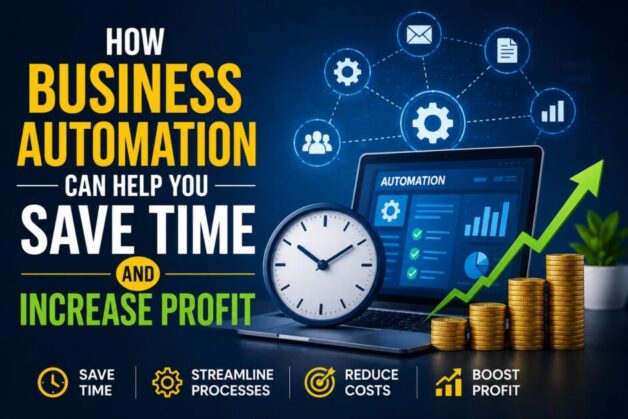
3. I Put My Most Annoying Tasks on Autopilot
Once my core information was organized and secure, I was ready to revisit my old enemy: automation tools. But this time, I approached it differently. I didn’t try to automate some big, complex workflow.
I started by making a list of the dumb, repetitive, soul-crushing tasks I did every single week. Things like sending a “thank you for your order” email, or reminding a client that an invoice was due.


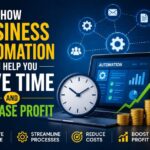
Then, I looked for simple, single-purpose tools to do just those things. My e-commerce platform had a feature for automatic emails. My accounting software could send automatic invoice reminders. I didn’t need one giant, scary “automation” platform. I just needed to turn on the features I was already paying for. This has saved me at least 5-10 hours a week. It’s like hiring a robot assistant for a few bucks a month.
4. I Finally Made My Tools Talk to Each Other
This was the last step, and it really tied everything together. I learned about e-commerce platform integration. This is a fancy way of saying I made my different software systems talk to each other so I don’t have to be the middleman.
For example, when someone buys something from my online store, the integration automatically creates a new customer profile in my CRM. It adds the sale to my accounting software. It even adds their email to my newsletter list. All without me lifting a finger.
Getting these integrations set up took a little bit of time and a few YouTube tutorials. I’ve actually detailed my experience comparing a few different tools in another post. ([Internal Link 2: to a hypothetical post titled “I Tried 5 Invoicing Tools, Here’s My Brutally Honest Review”]). But the payoff has been massive. It’s removed so many opportunities for human error (aka, my error). It makes the whole system feel cohesive, not like a bunch of random tools. Platforms like Shopify and BigCommerce have app stores filled with these integrations, and they’re essential for scaling without losing your mind ([External Link 3: Link to an e-commerce platform’s app store or integration page]).
So, Where Does This Whole Journey Leave Me?
It’s been about a year since that terrible Thursday. My desk is still a little messy sometimes. I’m still a work in progress.
But the blizzard of Post-it notes is gone.
I’m no tech genius now. I’m not even a “tech person.” But I’m no longer scared of this stuff. I’ve gone from being completely overwhelmed and reactive to feeling confident and in control of my own business. The change in my stress level alone is probably the biggest return on investment.
I started this journey because I felt like I was losing a race against my competitors. But along the way, I realized I was in the wrong race. The goal wasn’t just to “stay competitive.” The goal was to build a business that didn’t slowly crush my soul.
This tech stuff, as intimidating as it seems from the outside, is really just about that. It’s about creating systems that support you instead of draining you. It’s about buying back your time and your sanity so you can focus on the work you actually love.
It’s about turning the headlights on so you can finally see where you’re going.
So I’ll leave you with the question that started it all for me, but maybe a little differently.
What’s the one part of your business that feels like it’s driving you crazy? And what’s one small flashlight you could try, just this weekend, to bring a little bit of light to it?