














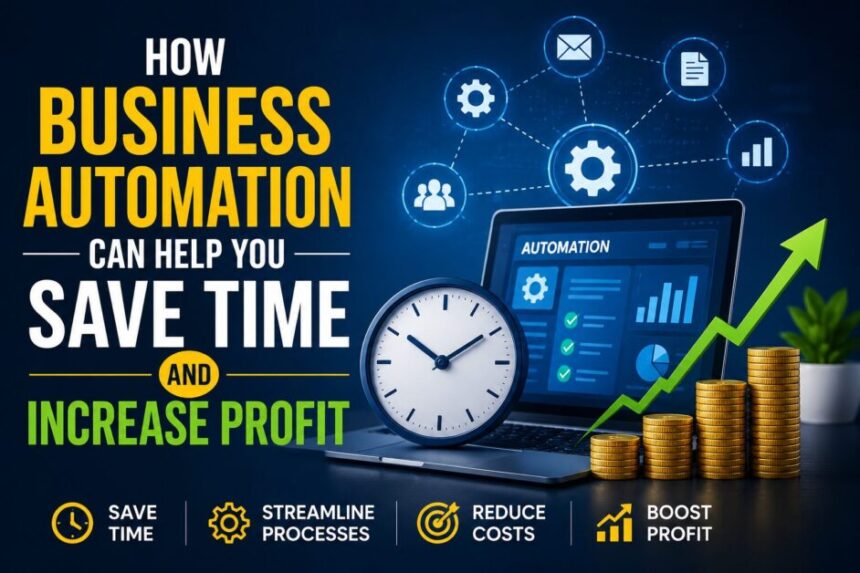
Why My Burnout Was Actually A Gift: How Business Automation Can Help You Save Time And Increase Profit
I remember staring at my laptop screen at 2:14 AM, the only light in my cluttered home office. My eyes felt like they had been rubbed with sandpaper, and my third cup of lukewarm coffee tasted like pure regret. I was supposedly “living the dream” as a small business owner, but the dream felt more like a recurring nightmare of endless spreadsheets and repetitive emails. It was in that moment of absolute exhaustion that I realized I couldn’t keep going this way. I was working fourteen-hour days, yet my bank account wasn’t reflecting that level of hustle.
The truth is, I was drowning in the “busy work” that comes with running a shop. I spent hours manually sending invoices, replying to the same five customer questions, and trying to keep my social media from looking like a ghost town. Then, I stumbled upon a concept that sounded like corporate jargon but promised a way out. I started looking into how business automation can help you save time and increase profit, and honestly, I was skeptical at first. It sounded like something only giant tech companies with massive budgets could afford to do.
However, I was desperate enough to try anything to get my life back. I didn’t want to just survive; I wanted to actually enjoy the business I had built from scratch. So, I began a messy, trial-and-error journey into the world of automated systems. It wasn’t an overnight success, and I definitely broke a few things along the way. But looking back, that pivot was the single most important decision I ever made for my sanity and my wallet.
The Night I Realized I Was My Own Worst Employee
We often hear that “hustle culture” is the only path to success, right? I bought into that lie completely, thinking that if I wasn’t exhausted, I wasn’t working hard enough. My daily routine was a chaotic mess of switching between tabs and losing track of important leads. Because I was so focused on the tiny details, I was missing the big picture of where my business was actually going. It’s funny how we think we’re being productive when we’re actually just being busy.


I was basically a glorified secretary for my own brand, which is a terrible use of a founder’s time. Every manual task I did was a task that didn’t involve growing the business or connecting with my actual customers. This realization hit me hard when I missed a major contract because I forgot to follow up on an email buried in my inbox. That was the moment I knew I needed a major shift in how I handled my workflow optimization. I needed to stop acting like a machine and start using them instead.
Actually, the fear of losing control was what kept me stuck in that manual cycle for so long. I thought that if I didn’t touch every single part of the process, it wouldn’t be done “right.” But I eventually had to admit that my “right” was becoming “late” and “sloppy” due to my sheer fatigue. Taking that first step toward digital transformation for small business<span class=”ng-star-inserted”> felt like jumping off a cliff without a parachute. Luckily, I found out that the parachute is built into the software if you just give it a chance.
Falling Down the Rabbit Hole of Tech Jargon
When I first started searching for solutions, I felt like I needed a PhD in computer science just to understand the landing pages. Words like “integrations,” “API,” and “sequential triggers” made my head spin faster than a record. I felt totally out of my depth, like a kid trying to sit at the adults’ table at Thanksgiving. For a few days, I almost gave up because I thought I wasn’t “techy” enough to make this work. But then I realized that most of these tools are designed for people exactly like me—people who are stressed and short on time.


I started small, looking for one thing I hated doing every single day. For me, it was the back-and-forth dance of scheduling meetings with potential clients. I would send three dates, they’d pick one I’d already filled, and we’d start the whole process over again. It was a massive time-suck that added zero value to my life or my bottom line. So, I decided to try an automated scheduling tool, which felt like magic the first time it worked.
This small win gave me the confidence to keep digging deeper into the possibilities. I started to see that automation isn’t about replacing the human touch; it’s about removing the robotic tasks from humans. When you stop doing the things a computer can do better, you finally have the energy to do the things only you can do. It’s about creating scalable business processes that don’t depend on you being awake twenty-four hours a day. And let me tell you, once you taste that freedom, there is no going back to the old way.
My First Clumsy Steps into the World of Automation
The first tool I actually set up was a simple automation that connected my lead capture form to my email list. Before this, I would manually copy-paste email addresses from my website notifications into a spreadsheet. It sounds ridiculous now, but at the time, I thought I was being “thorough.” In reality, I was just wasting about four hours a week on a task that a simple “Zap” could do in seconds. When I saw the first lead flow automatically into my CRM, I felt a strange mix of relief and intense annoyance at myself for waiting so long.
I quickly realized that I needed to look into CRM automation tools to handle my growing list of contacts. I chose a platform that felt intuitive, rather than the one with the most bells and whistles. It’s a common mistake to buy the most expensive software thinking it will solve all your problems automatically. In my experience, the best tool is the one you actually understand how to use without crying. I started setting up “tags” and “sequences” that helped me stay in touch with people without me having to lift a finger.
However, I did mess up a few times, like the time I accidentally sent a “Welcome” email to someone who had been a client for three years. It was embarrassing, sure, but the client actually laughed and appreciated the “human” glitch in my new system. It taught me that people don’t expect perfection; they just want consistency and value. My new system was providing that consistency, even if I was still learning how to steer the ship.
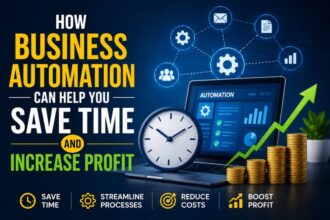
How Business Automation Can Help You Save Time And Increase Profit Fast
Once the basic plumbing of my business was automated, the financial impact became impossible to ignore. I wasn’t just saving time; I was actually making more money because I wasn’t dropping the ball on leads anymore. Before, a potential customer might wait two days for a reply, but now they got a resource-packed email within five minutes. This immediacy built trust before I even had to hop on a call with them. It turns out that speed is a massive competitive advantage in the digital age.
By using these systems, I was able to focus on high-level strategy instead of low-level data entry. This is exactly how business automation can help you save time and increase profit—it frees your brain to do the creative work that actually drives revenue. I started developing new products and refining my marketing because I wasn’t exhausted by 10 AM. My return on investment (ROI) wasn’t just measured in dollars, but in the hours of sleep I was finally getting back.
According to a study by the Harvard Business Review, companies that embrace automation see significant gains in both productivity and employee satisfaction. I was living proof of that, even as a “team of one” at the time. I stopped looking at software as an expense and started seeing it as a tireless employee that never asks for a raise. When you look at it that way, the monthly subscription fees become the best bargain in your entire budget.
Breaking the Chains of the “Manual Labor” Mindset
The hardest part of this whole transition wasn’t the technology; it was my own mindset. I had a weird “martyr complex” where I felt like work only “counted” if it was difficult and draining. I had to unlearn the idea that using a tool to do my work was somehow “cheating.” In reality, using tools is what humans have done since we invented the wheel to move heavy stones. Why should our digital offices be any different from a construction site or a factory?
I had to sit down and literally map out every single thing I did in a week. It was an eye-opening exercise that revealed just how much time I was flushing down the toilet. I noticed that I was doing the same repetitive tasks over and over, like a character in Groundhog Day. Each one of those tasks was a candidate for automation, and seeing them on paper made the choice obvious. I needed to move toward better operational efficiency if I wanted my business to survive the year.
Surprisingly, my customers actually preferred the automated versions of my processes. They liked getting their invoices immediately and having a clear, automated onboarding sequence to follow. It made my little business look much more professional and “put together” than I felt on the inside. I realized that by trying to do everything myself, I was actually providing a worse experience for the people I was trying to serve. That was a bitter pill to swallow, but it was exactly what I needed to hear.
Mastering the Art of Customer Lifecycle Management
As I got more comfortable, I started looking at the entire journey a person takes from stranger to loyal customer. This is often called customer lifecycle management, and it sounds way more intimidating than it actually is. It basically just means making sure no one falls through the cracks at any stage of their relationship with you. I set up automated check-ins for three months after a purchase to see how they were doing with the product. Before automation, I would do this for maybe two people before I got distracted and forgot.
These automated touchpoints turned one-time buyers into repeat customers and vocal fans of my brand. And because I wasn’t the one manually typing the emails, I could spend that time actually chatting with people on social media. I was using the “robots” to handle the generic stuff so I could be more “human” where it actually mattered. This balance is the “secret sauce” that many people miss when they think about business tech. You don’t want to become a cold, faceless machine; you want to use machines to be a better person.
Moreover, having these systems in place made my business much more resilient to personal disruptions. If I got sick or wanted to take a weekend off, the lead generation and nurturing didn’t just stop. The “store” was always open, and the “assistant” was always working, even while I was watching a movie or sleeping. This gave me a level of peace of mind that I hadn’t felt in years. I finally stopped checking my email every five minutes because I knew the system had things under control.
The Tools That Saved My Sanity and My Wallet
People always ask me which specific tools I use, and while everyone’s needs are different, some are universal. For instance, I use a project management tool that automatically assigns tasks based on the stage of a project. This prevents the “what do I do next?” paralysis that used to kill my productivity every Monday morning. I also heavily rely on a tool that syncs my social media posts across different platforms so I don’t have to log in five times. These aren’t just gadgets; they are the gears that keep the engine running smoothly.
According to reports on Forbes, small businesses that automate their marketing see an average increase in sales productivity of 14.5%. That’s a massive jump for doing less work than you were doing before. I certainly saw those numbers reflected in my own growth over the first six months of implementation. I was able to handle double the workload without adding any additional stress to my daily life. In fact, I was less stressed than I had been when I had half the amount of clients.
But remember, you don’t need to automate everything at once, or you’ll just end up overwhelmed by the setup process. I recommend starting with one “pain point” and mastering it before moving on to the next one. For me, it was the scheduling; for you, it might be the billing or the shipping updates. Whatever it is, pick the thing that makes you sigh the loudest when you think about doing it. That is where the most significant return on investment (ROI) usually hides.
Why You Don’t Need to Be a Tech Genius
I think a lot of people stay stuck in manual mode because they are afraid of the learning curve. I’m here to tell you that if you can use a smartphone, you can set up most of these automation tools. Most of them use “if this, then that” logic, which is basically how we make decisions every day anyway. “If a customer buys a shirt, then send them a thank-you email.” It’s really that simple when you strip away all the fancy marketing talk.
There are also incredible resources out there like Zapier’s learning center that walk you through every step. I spent a few Saturday mornings watching tutorials, and it was the best time-investment I ever made. Instead of scrolling through social media, I was learning how to make my business run itself. It felt empowering to realize that I could build these complex-looking systems without writing a single line of code. We live in an age where the barrier to entry for high-level tech is lower than it has ever been.
So, if you’re holding back because you think you’re “not a computer person,” you’re actually just holding yourself back from growth. The software is getting more user-friendly every single day, with drag-and-drop interfaces and helpful templates. You don’t have to build the car; you just have to learn how to drive it. And trust me, once you stop walking and start driving, you’ll wonder why you ever did it the hard way. It’s all about giving yourself permission to work smarter instead of just harder.
Reclaiming the “Human” Side of My Business
The most unexpected benefit of this whole journey was how much more “human” my business became. This sounds counterintuitive, right? You’d think more machines would mean less personality, but it was actually the opposite for me. Because I wasn’t bogged down by the “drudge work,” I had the emotional energy to actually talk to my clients. I started sending personalized videos to long-term partners just to say thanks, something I never had time for before.
I was able to bring my authentic self back to my brand because I wasn’t constantly on the verge of a breakdown. My social media posts became more creative and engaging because I wasn’t rushing to post them in between five other tasks. Automation gave me the space to be a creator again, rather than just a manager. And unsurprisingly, my audience responded to that shift with more enthusiasm and higher engagement rates. People can tell when you’re present and when you’re just “mailing it in” because you’re exhausted.
This is the real answer to how business automation can help you save time and increase profit—it restores your passion. When you’re passionate, you do better work, and when you do better work, people are more willing to pay for it. Profit is often a byproduct of the quality and energy you put into your offerings. By letting the “robots” handle the boring stuff, I was able to pour my soul back into the parts of the business I actually love. That energy is infectious and has done more for my sales than any fancy ad campaign ever could.
Avoiding the Trap of “Over-Automation”


Now, I should give a little warning here because it’s easy to get a bit carried away once you see the results. I went through a phase where I tried to automate absolutely everything, including things that really needed a personal touch. I tried an AI chatbot for customer service that ended up frustrating people more than helping them. I learned the hard way that there are some things you just shouldn’t hand over to a script. If someone is reaching out with a genuine problem or a unique question, they need a real person.
The goal is to automate the processes, not the relationships. You want to use technology to clear the path so you can walk down it with your customers, not to build a wall between you. I eventually dialed back some of the more “robotic” elements and found a middle ground that felt right. It’s a bit of a balancing act, and you’ll likely have to adjust your settings as you go along. But even with a few manual steps kept in place, I was still 80% more efficient than I used to be.
Think of automation as a foundation, not the whole building. It provides the stability and the structure, but you are the one who provides the decor and the life inside. If you automate the wrong things, you risk losing the very thing that makes your business special. So, always ask yourself: “Does this task require my unique empathy or creativity?” If the answer is no, then find a tool to do it for you. If the answer is yes, then guard that task with your life and give it your full attention.
The Financial Freedom of Scalable Systems
Before I embraced these changes, my income was directly tied to how many hours I could physically work. If I wanted to make more money, I had to sacrifice more sleep, and there’s a very hard ceiling on that. But once I focused on scalable business processes, that ceiling completely disappeared. I could take on ten new clients without it adding ten hours to my weekly workload. The systems I built were doing the heavy lifting, allowing the business to grow horizontally while I stayed steady.



This scalability is what actually leads to long-term wealth and stability. You can’t truly “increase profit” if your expenses (especially your time) go up at the exact same rate as your revenue. True profit comes from increasing the gap between what you bring in and what it costs you to get it. By lowering the “time cost” of every sale through automation, I was effectively giving myself a massive raise. My profit margins started looking much healthier, and my stress levels started looking much lower.
It’s also important to note that a business with solid automated systems is much more valuable if you ever decide to sell it. A buyer wants to see a machine that runs without the founder constantly poking it with a stick. They are buying a system, not just a job for themselves. So, even if you aren’t planning to sell anytime soon, building these systems is like putting money into a high-interest savings account. You are building “equity in time,” which is the most precious commodity any of us has.
Finding the Right Balance for Your Lifestyle
Ultimately, the reason I’m so passionate about this isn’t just about the money; it’s about the life it allows me to lead. Last month, I was able to take a full week off to visit my parents, and my business didn’t skip a beat. I didn’t have to spend my whole “vacation” hunched over my phone in the back of a rental car. My leads were being captured, my emails were being sent, and my payments were being processed all on their own. That kind of freedom is what I thought I was getting when I first started my business, and automation finally delivered it.
You have to decide what your “enough” looks like and how you want to spend your days. For some, how business automation can help you save time and increase profit is about becoming a billionaire. For me, it was about being able to eat lunch away from my desk and not feeling guilty about it. It’s about having the “mental bandwidth” to be present for my friends and family. Your business should be a vehicle that takes you where you want to go, not a ball and chain that keeps you in one spot.
So, if you’re currently where I was—exhausted, overwhelmed, and wondering if it’s all worth it—please know there’s a better way. You don’t have to be a tech wizard or have a huge team to start making these changes today. Start with one small task, find a tool that helps, and see how it feels to have that weight off your shoulders. Once you start reclaiming your time, you’ll find that the profit tends to follow much more naturally. It’s not about working harder; it’s about building a system that works hard so you don’t have to.
Embracing the Future of Your Business
Looking back at that 2 AM version of myself, I feel a lot of compassion for that person. I was trying so hard, but I was spinning my wheels in the mud of manual labor. I wish I could go back and tell myself that it’s okay to let go of the reins a little bit. The world won’t end if an email is sent by a computer instead of your own tired fingers. In fact, the world might just start getting a lot better for you and your business.

As you move forward, keep an eye out for new ways to simplify and streamline your day-to-day operations. The landscape of business is changing fast, and those who adapt are the ones who will thrive. Don’t be afraid to experiment and fail, because every “error” in your automation setup is just a lesson in how to build a better system. You are the architect of your business, and every tool you implement is another brick in a much more stable house.
In the end, the goal of understanding how business automation can help you save time and increase profit is to create a business that serves you. Too often, we end up serving our businesses, and that is a recipe for long-term burnout. Take back your time, protect your energy, and use the incredible technology available to us to build something that lasts. You’ve worked hard to get where you are; now, let the systems work hard to take you where you’re going. It’s a journey worth taking, and the first step is a lot easier than you think.
Final Thoughts on Your Automation Journey
I hope my story has given you a little bit of hope and maybe a little bit of a nudge to try something new. You don’t have to do it all today, and you don’t have to do it perfectly. Just start looking at your tasks through the lens of “Could a computer do this?” and see what happens. You might be surprised at how much of your “essential” work is actually just repetitive noise. Clear that noise away, and you’ll find the music of your business again.
Remember that you are not alone in this, and there are millions of other small business owners figuring this out right alongside you. We are all just trying to make sense of this digital world and find a way to thrive within it. Use the resources available, ask for help when you need it, and don’t be afraid to be a “beginner” again. The learning curve is temporary, but the benefits of a well-automated business are permanent.
So, go ahead and take that first small step toward a more efficient future. Whether it’s setting up an auto-responder or finally using a scheduling link, celebrate that win. Every minute you save is a minute you can spend on what truly matters to you. And that, more than any profit margin, is the true mark of a successful entrepreneur. Good luck, and I can’t wait to hear about all the time you’re going to save!