













I Was Rejected by a Bot: The Brutal Reality of AI in Recruitment.
Let’s be honest for a second. Have you ever spent four hours perfectly tailoring your resume, triple-checking every comma, and hitting “Submit” with a heart full of hope—only to get an automated rejection email exactly six minutes later?
I have. It feels less like a professional “NO” and more like being ghosted by a machine.
As we move deeper into 2026, the job market has changed from a handshake and a conversation into a high-stakes game of “Battleship” against an algorithm. We are no longer just competing with other humans; we are competing with software that scans for keywords, analyzes facial micro-expressions, and predicts our “cultural fit” before we’ve even said hello.
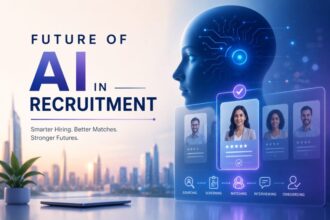
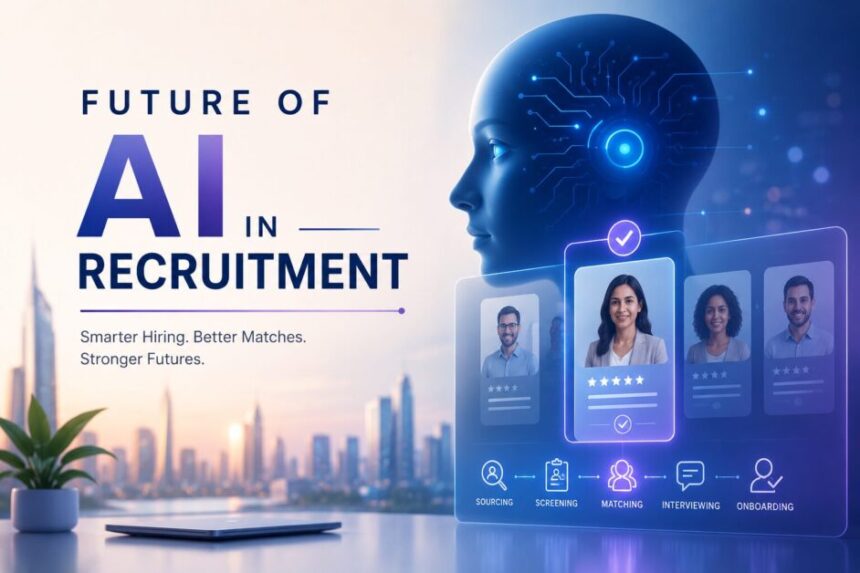
Today, I want to pull back the curtain on the “Future of AI in Recruitment”. We’re going to talk about the “Black Box” of hiring, the ethics of being judged by code, and most importantly, how you and I can stay human in an increasingly robotic world.
1. The Day I Realized the Gatekeeper Wasn’t Human
A few months ago, I applied for a dream role. I had the experience. I had the passion. I even knew the software they used. But within minutes, the “Thanks, but no thanks” email landed in my inbox.
I was confused. No human could have read my application that fast. That’s when it hit me: I didn’t fail the job; I failed the *Talent Intelligence Platform*.
In 2026, the “Gatekeeper” is an AI. These platforms aren’t just looking at your skills; they are analyzing “signals.”
* The Syntax Check: Does your resume format break the bot’s reading flow?
* The Keyword Density: Did you use the word “Strategic” four times or five?
* The Gap Penalty: Did the AI see that three-month break you took to care for your mental health and decide you were a “risk”?
2. The Efficiency Trap: Why Companies Love (and Hate) the Bots.
From the other side of the desk, you can almost understand why companies do it. Imagine being a recruiter at a global firm. You post one “Remote Project Manager” role and by the time you finish your coffee, you have 14,000 applications.
If a human spent just 60 seconds on each resume, it would take **233 hours**—nearly six weeks—just to read them once.
But here’s the problem: Efficiency doesn’t always mean *quality*. By optimizing for speed, companies are accidentally filtering out the “Diamonds in the Rough”—the people who don’t have the “perfect” resume but have the exact grit the company needs.




3. The “Black Box” of Video Interviews
This is where it gets truly futuristic and a little bit creepy. Have you heard of ‘One-Way Video Interviews’?
You sit in front of your webcam. There is no person on the other side. A question flashes on the screen: “Tell us about a time you handled conflict.” You have 30 seconds to prepare and 2 minutes to talk to a lens.
Behind the scenes, the AI is watching:
1. Your Eye Movement: Are you looking at the camera or reading notes?
2. Your Tone: Is your voice steady, or do you sound hesitant?
3. Your Keywords: Are you hitting the “competency markers” the company wants?
4. The Ethical Nightmare: Algorithmic Bias
We were told AI would be the “Great Equalizer.” It wouldn’t care about your gender, your age, or where you grew up. But AI is trained on historical data.
If a company’s “most successful” employees for the last ten years have all been 30-something men from specific universities, the AI learns that *this* is what success looks like. It begins to subconsciously reject anyone who doesn’t fit that mold.
This is the Mirror Effect. The AI isn’t just predicting the future; it’s repeating the past. In 2026, we are seeing global movements for “Algorithmic Transparency,” demanding that companies show *why* the bot rejected someone.
5. How to “Bot-Proof” Your Career (My Personal Strategy)
After my rejection, I went on a mission to figure out how to beat the system. Here is what I learned about staying relevant in the AI era.
A. The “Human-First” Resume
Stop writing for humans initially. You have to write for the machine to get to the human.
Standardize Everything: Use “Experience” not “Career Adventures.” Use “Contact Information” not “Let’s Connect.”
The Power of 80%: Your resume should match about 80% of the job description’s keywords. Don’t copy-paste, but use the *exact* terminology they use.
Text Only: Graphics, columns, and tables confuse the 2026 AI. Keep it simple.
B. Double Down on “Non-Bot” Skills
What can’t a machine do?
It can’t feel empathy.
It can’t negotiate a complex, multi-million dollar deal based on trust.
It can’t inspire a team during a crisis.
If your job description looks like a list of tasks, an AI will take it. If your job description looks like a list of *relationships and complex problem solving*, you are safe.
6. The Rise of the “Fake” Candidate (The 2026 Fraud Crisis)
Interestingly, as companies use AI to hire, candidates are using AI to “cheat.”
In 2026, “Deepfake Candidates” are a real problem. People are using AI voice-cloners and real-time video overlays to pretend to be someone they aren’t during interviews.
One recruiter told me, *”I had a candidate who was answering technical questions perfectly, but his lips weren’t quite matching the audio. I asked him to wave his hand in front of his face, and the AI overlay glitched. He was a fraud.”*
This “Arms Race” between hiring bots and cheating bots is making the process even more exhausting for honest people like us.
7. A Call for “Human-Centric” Hiring
I want to speak directly to the hiring managers and CEOs out there: **Stop outsourcing your soul to a server.**
AI is a brilliant tool for sorting data, but it is a terrible judge of character. If you want a company of people who think outside the box, you have to stop using a box-checking algorithm to find them.
The best global companies are moving toward a **Hybrid Model**:
1. AI handles the massive volume of 10,000+ resumes.
2. Humans are brought in much earlier to look at the “Top 100” with an open, empathetic mind.
3. Candidates are given a chance to explain their “gaps” or “non-traditional” backgrounds.
8. Interactive Guide: Are You Ready for Your Next Interview?
Let’s do a quick “Check-Up.” If you were to apply for a job today, how would you score on these AI-readiness metrics?
1. Is your LinkedIn profile updated with “Signal Keywords”? (AI uses LinkedIn to verify your resume).

3. Have you practiced talking to a webcam without a person on the other side? (It’s harder than it looks!)
9. Educational Deep Dive: The Different “Personalities” of AI Recruitment
To help you navigate this, you should know which “bot” you’re talking to. In 2026, these are the three main types:
The Sorter (ATS): These are the most common. They look for “fit” based on keywords. They are logical but rigid.
The Evaluator (Assessments): Think of those “personality games” you have to play. They are testing your cognitive patterns, not your answers.
The Analyzer (Video AI): These are the “body language” experts. They are controversial and increasingly regulated, but still very active in high-volume hiring.
10. Conclusion: You Are More Than a Data Point
At the end of the day, the Future of AI in Recruitment is a tool, not a destiny.
Yes, it’s frustrating. Yes, it feels unfair to be rejected by a piece of code. But remember: a machine can analyze your past, but it cannot define your future.
The goal for us as job seekers and professionals is to learn the “rules of the machine” so we can get past the digital gatekeepers and do what we do best—be human.
What do you think?
Is AI making the world fairer by removing human prejudice, or is it making the world colder by removing human empathy?
I’ll be in the comments section below, and I’d love to hear your thoughts. Let’s navigate this robotic future together.